
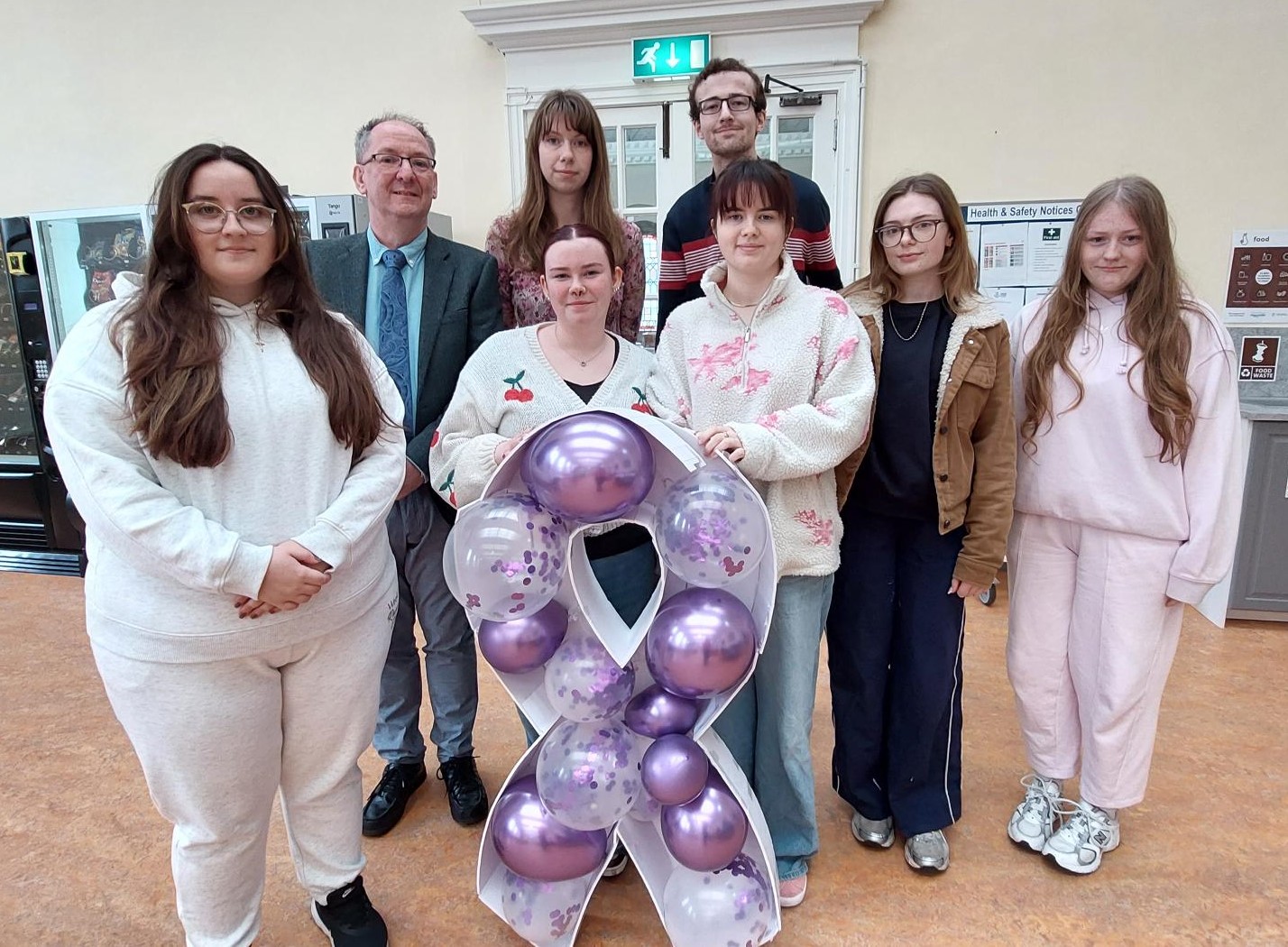
Carlow College, St Patrick’s marked International Women’s Day 2026 with a vibrant series of events designed to honour women’s voices, creativity, and achievements. This year’s celebrations brought students and staff together through reflective, art, conversation and shared learning.
Pop-Up Talks & Poetry Readings
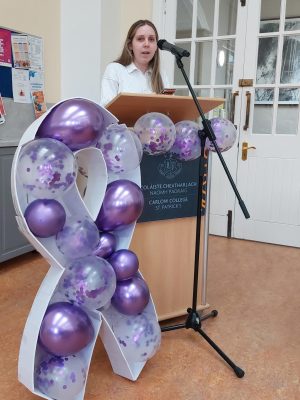
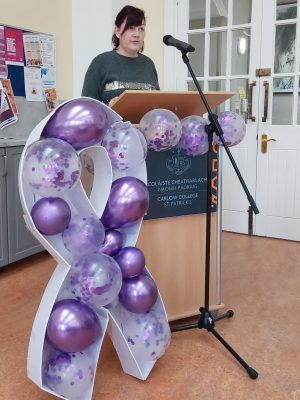
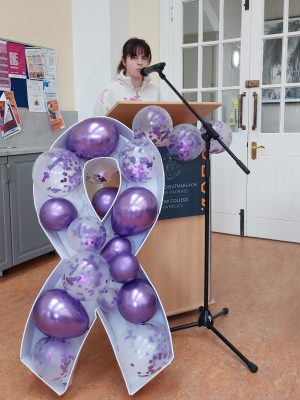
The celebrations kicked off with a series of pop-up talks and poetry readings by students exploring feminism, identity, and lived experience. These performances highlighted the diverse voices within the Carlow College community and fostered meaningful conversation on gender equality.
See below for some of the contributions to the session.
Pop-Up Talk | "Housework" by Mya Mulhern
Today I would like to take about something very ordinary: housework. This includes things like cooking, cleaning, laundry, and childcare. These are tasks that most women deal with every day. Though they might seem like small, private things that happen inside the home, feminists have argued for a long time that housework actually tells us a lot about gender equality in society. For international women’s day, I want to briefly look at how two feminist perspectives, Liberal and Marxist feminism think about housework and ask whether we’ve really solved the problem.
Liberal feminism is a branch of feminism focused on achieving gender equality through political and legal reform within the framework of liberal democracy. Thus, Liberal feminism focuses on equality between men and women, especially when it comes to opportunities, rights, and fairness. From this perspective the issue with housework is mainly about who is doing it. Traditionally, women have done most of the work in the home, even when they also work outside the home. This is sometimes called the “double burden” having both a paid job and responsibility for most of the domestic work. Even today, the division of housework is still unequal. For example, across Europe women spend about 262 minutes per day on unpaid work, while men spend around 141 minutes. That means that women do about two extra hours of unpaid work every day. Other research shows that about 63% of women do housework daily, compared to about one third of men. So from a Liberal feminist perspective, the solution is quite straightforward, housework should be shared more equally. Whether it is legislated or an agreement between men and women, If both work outside the home, then both should also share the work inside the home. There has definitely been progress compared to the past on this. More men today are involved in childcare and household tasks than previous generations. But the statistics show that work is still not divided equally.
Marxist feminism is a theoretical, political, and philosophical perspective that links the oppression of women directly to the capitalist system, arguing that gender inequality is rooted in class struggle. Marxist feminists then, look at housework a little differently. Instead of focusing only on fairness between couples they focus on how housework fits into the wider economic system. Their argument is that housework is a form of unpaid labour that keeps the economy running. For example, cooking, cleaning, and caring for children help maintain the workforce. Workers are able to go to work each day partly because someone is doing the work at home that keeps life functioning. But the key point is that this works is usually unpaid and often invisible. Historically, women have done most of this unpaid labour. So Marxist feminists argue that the economic system benefits from women’s domestic work without recognizing or paying for it. From this perspective, the problem isn’t just that housework is unfairly divided, it’s also that this type of work is undervalued in society. Even though housework and care work are essential for society to function, they are often treated as if they are less important than paid work.
So these two perspectives highlight different but related issues. Liberal feminists focus on rights, fairness and equality within the home i.e. who is doing the work. While Marxist feminists focus more on how society and the economy depend on unpaid domestic labour. And even today, housework raises some important questions about how we value care, family life, and the labour that keeps everyday life moving.
So, I’d like to finish with a few questions to open up discussion: do you think housework is becoming more equal between men and women? Why do you think domestic work is still often unpaid or undervalued? And what would real equality around housework actually look like?
Thank you for listening!
Poetry Reading | "Everyday" by Clodagh Fitzsimons
Everyday.
Women,
I see them everyday.
Everyone different,
Never the same.
To young girls,
Giggling and whispering,
Their secrets kept like contraband,
Gossiping about their latest drama,
Maybe a boy they like, one that makes them blush,
Or a girl that fuels the flames of fury within.
To women trying,
A child attached to their hip,
Supporting the weight,
Arms shaking, Eyes soft with love
Exhaustion is evident but,
her strength shining evermore.
The older women,
Sucking their teeth,
Silently reading,
Perhaps a book or the news?
glasses perched on the nose,
Just about to fall.
Women,
We have our differences,
To who we love,
To our clothes, music and colours.
Despite everything we all have a unity,
The unity of women,
An alliance,
A secret code,
“Girl code”
One that makes us stronger,
We bring each other up,
Empower one another,
“Girl code”
Is the foundation of being a woman.
Clodagh Fitzsimons
Mindfulness Session
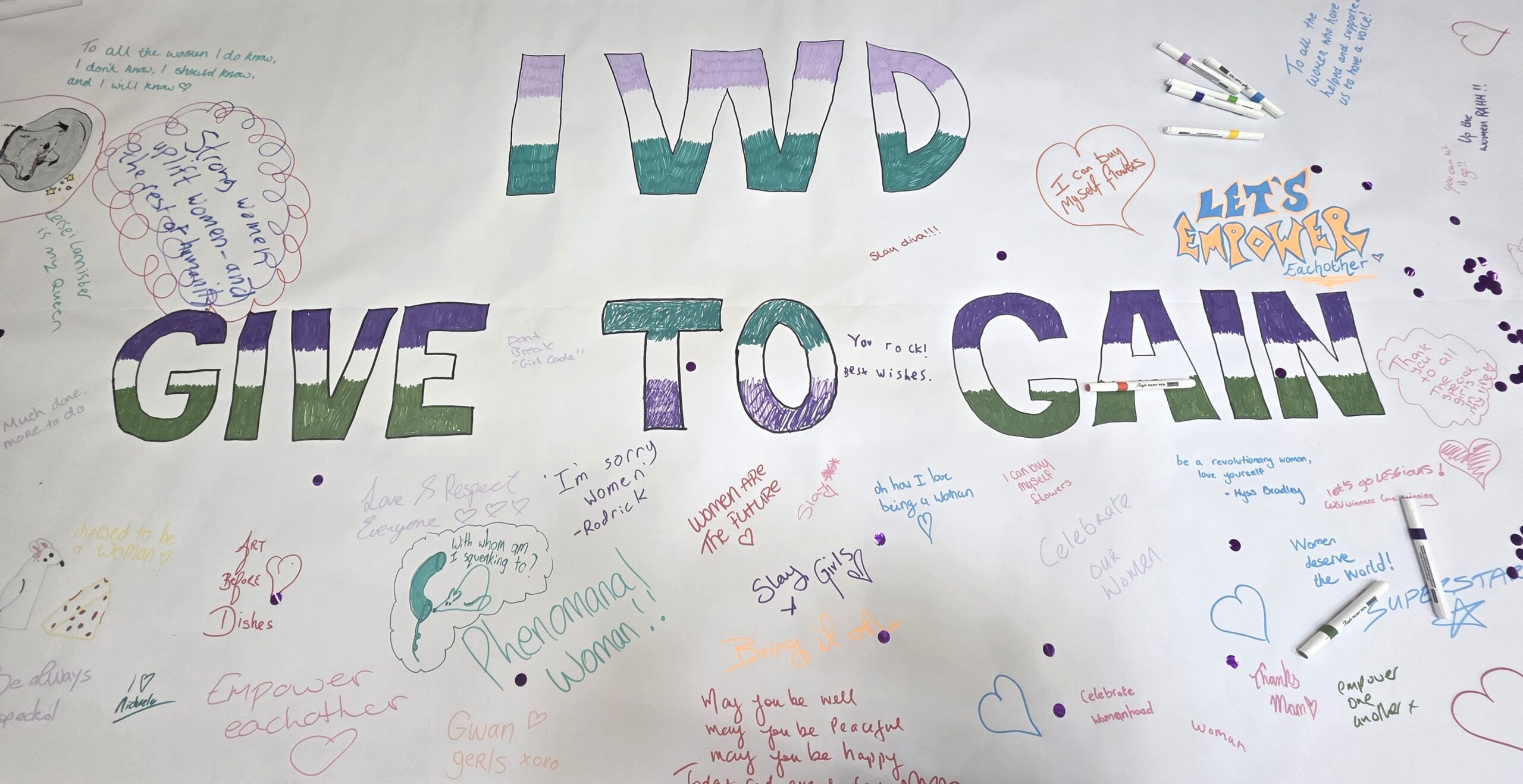
Collaborative Mural: "Give a Mark, Gain a Masterpiece"
Recycle Your Reads: "Give a Book, Gain a Voice"
Linking in to the College’s library services and sustainability initiatives, students and staff were invited throughout the week to participate in a book‑swap initiative inviting participants to bring in a book by a female author and exchange it for another. Attendees were encouraged to leave a handwritten message on a sticky note, creating a growing display of personal reflections and literary inspiration.
Lunchtime Quiz in Celebration of Female Icons
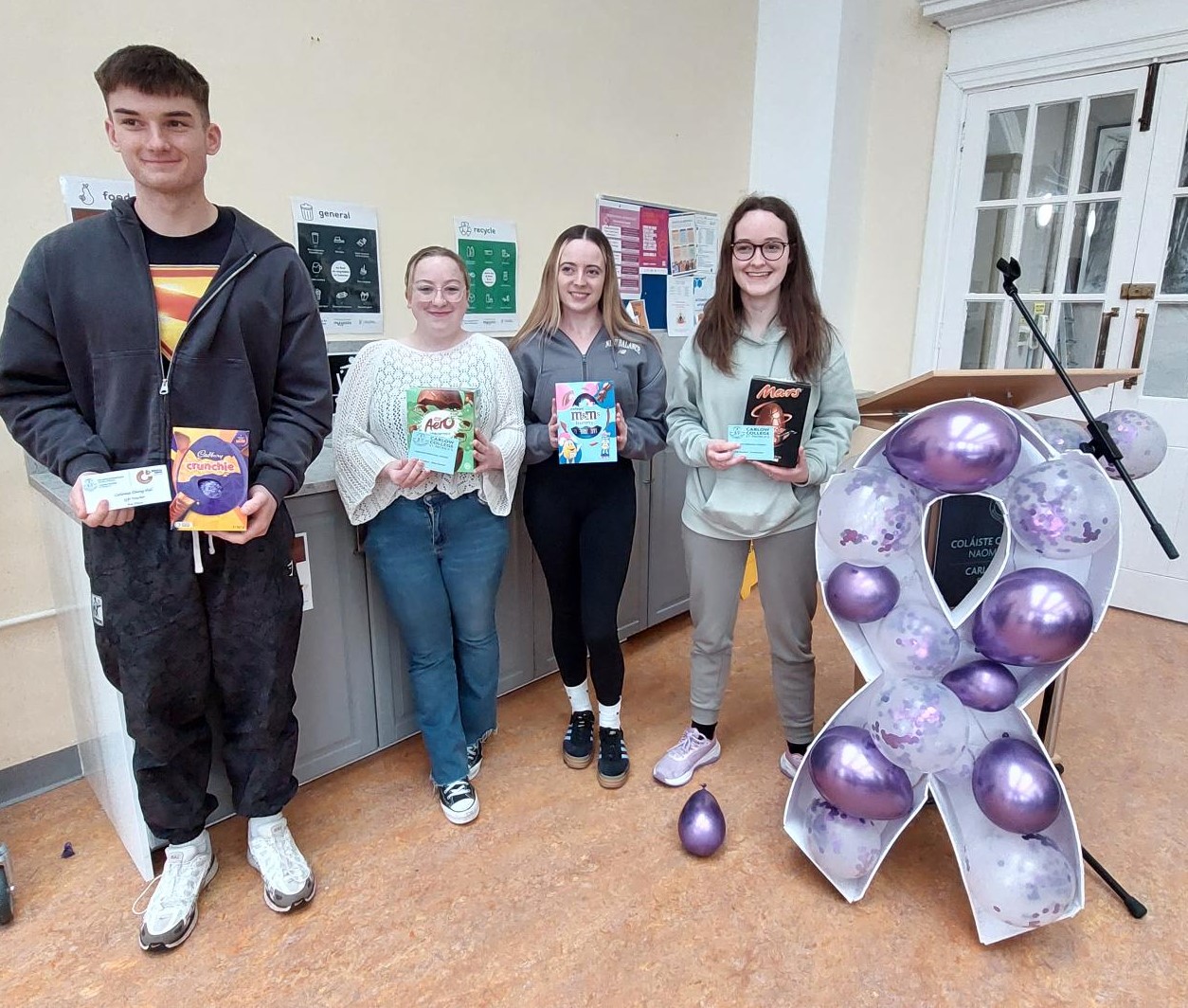
The College Dining Hall came alive at lunchtime with a lively quiz featuring questions centred on influential women past and present. With prizes on offer, the event combined fun with learning, encouraging teams to test their knowledge of female trailblazers and changemakers.
These events were coordinated by the Carlow College EDI Team, in collaboration with Carlow College Students’ Union.